TIMBER WOLF
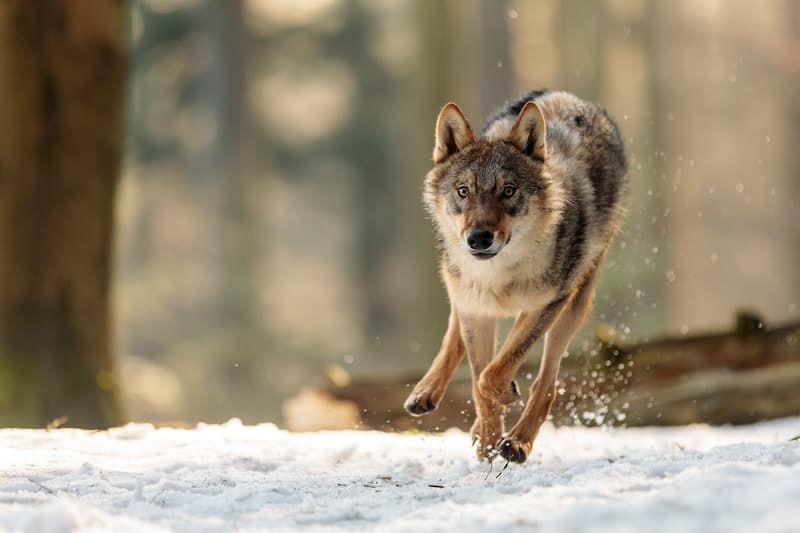
- Name: Timber Wolf
- Category: Mammal
- Habitat: N/A
- Diet: Wolves are carnivores and, depending on food availability, they will hunt their own prey, steal from others or scavenge. They hunt larger prey such as moose, caribou, elk, musk ox and bison in packs, and smaller prey, such as rabbits, beavers and other small animals by themselves. Adults can eat 20 pounds of meat in a single meal.
- Reproduction: The average Ontario litter contains five pups. The helpless new-borns are blind and have a woolly coat of greyish-brown or sooty grey. Their eyes open within the first 10 to 12 days, and the adult pelt pattern begins to emerge by the end of the first month. Gray wolves usually live in packs of up to two dozen individuals; packs numbering 6 to 10 are most common.
About Timber Wolf
The wolf has several common names, including “eastern timber wolf”, “grey wolf and “black wolf”. The wolf is about the size of a large German shepherd, but its legs are lankier and its chest is narrower. Males weigh from 27 to 36 kg (60 to 79 lbs), and northern wolves may be even heavier. Females are lighter by 5 to 7 kg (11 to 15 lbs) and have smaller frames. The southern boundary of the range corresponds to a line between the middle of Lake Simcoe and the northern part of Lanark County.
Wolves are found of Ontario where there are large forests. They can appear in a variety of colours, from white to brown to black, but is most often grey. Gray wolves are the largest living wild canine species.
Location
-

Name: Bon Echo Provincial Park
Address: 16151 Hwy 41, Cloyne ON
-
Name: Pukaskwa National Park
Address: Hwy 627, Heron Bay ON
-
Name: Rattlesnake Point Conservation Area
Address: 7200 Appleby Line, Milton ON